


Endowed professorships are transformative philanthropic investments that profoundly shape Spartan engineers. Being appointed to an endowed professorship is a noteworthy achievement that enhances opportunities for faculty members to pursue new discoveries, mentor dedicated students, and build innovative programs that recruit the next generation of changemakers.
Endowed professorship funds are created via philanthropic gifts – from individuals, foundations and corporations. Once established, MSU’s thoughtful investment strategy ensures these funds produce revenue in perpetuity, so our dedicated faculty can continue to lead the way in solving society’s most pressing issues.
Read on to discover more about our 14 endowed professors and the generous donors who invested in them.
Tom and Lupe Izzo Endowed Professor in Engineering and Medicine

Cheri Deng
Research Highlights
- A new point of care platform for blood coagulation assessments that can be used for trauma and cancer patients undergoing chemotherapy;
- A new system for screening for neurodevelopmental toxicity;
- And developing technology specific to type 1 diabetes and cancer treatments.
Craig A. Rogerson Endowed Professor in Chemical Engineering

Michael A. Hickner
Research Highlights
- My team and I have continued to work on ion conductors and 3D printing; we have collaborated with Oak Ridge National Laboratory on new battery electrolytes; we are also developing new polymers for use in polymer-derived ceramics through our work with the Navy. My group has made a lot of progress in these key areas, and we continue to look for translational opportunities to move our work from the lab to the commercial sphere.
- Most recently, we have been working on separation of critical minerals using advanced membranes, which includes separating radioactive isotopes
John R. Koza Endowed Chair in Genetic Programming
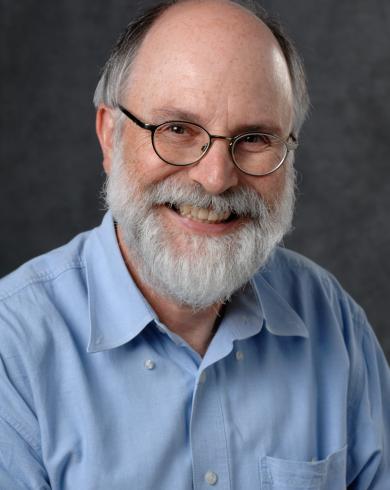
Wolfgang Banzhaf
Research Highlights
- The students in my graduate Genetic Programming course, who are required to develop their own GP systems. The variety of systems they have created, including parallel and multi-threaded systems, is amazing.
- My postdoc who helped develop our ARJA system for bug repair using GP in JAVA, who won a bug repair competition at an IEEE competition.
- Current and former students, who participated as reviewers (and one co-editor) for a collected volume on “Advances in Linear Genetic Programming,” now in production with Springer.
Martin J. Vanderploeg Endowed Professor in the College of Engineering

Arun Ross
Research Highlights
- DeMorphing - reversing fake face images that are created by blending two real faces together, a tactic that can be used to fool systems in applications like passport verification. We helped shift the field from merely detecting morphed images to recovering the original contributing identities hidden within them. This work moves biometric security beyond just identifying fake images; it answers the question, “whose faces were used to create them?”
- Explainable Recognition - using large language models (LLMs) to generate natural-language explanations for face-recognition decisions. We showed how foundation models can complement domain-specific systems, identified challenges such as hallucinated attributes, and proposed principled methods to evaluate explanation quality, helping make face recognition more trustworthy for human operators.
- Plant Phenomics and Genomics - developing AI and knowledge-graph approaches that link genomic, environmental, and phenotype data to predict plant responses to environmental change. We have also proposed methods like the Sequential SNP Prioritization Algorithm (SSPA) to better identify genetic variants linked to important sorghum traits, such as canopy height and growth rate. In complementary work on phenomics, we developed generative models that can synthesize biologically plausible plant and forestry images conditioned on measurable traits such as canopy greenness, helping expand data resources for downstream analysis. We aim to make agriculture and plant science more predictive, interpretable, and data driven.
Dennis P. Nyquist Endowed Professor in Electromagnetics
 Leo Kempel
Research Highlights
- In addition to supporting a college-level research initiative, I have continued to work on ultra-thin monopole apertures with wide bandwidth. This includes development of design models, design concepts, fabrication of prototypes, and measurements.
- Applications are being discussed based on our findings.
- Two conference papers have been submitted, a journal paper is planned, and one patent disclosure filed with MSU Technologies.
Douglas E. Zongker Endowed Professor in Engineering

Anil K. Jain
Research Highlights
- I have been investigating topics less likely to be funded by external agencies, like the use of synthetically generated data for model training, information leakage in the synthetic data, and other related issues.
Dr. Herman E. and Ruth J. Koenig Endowed Chair in Communication Systems

Kalyanmoy Deb
Research Highlights
- I have mentored seven post-doctoral fellows and guided 28 PhD students, of which 19 were directly supported by endowed funding;
- I have published 186 referred journal publications and 190 referred conference publications, averaging about 25 per year. In almost all of these papers, my students and post-docs were the first authors;
- My students and I organized an International EMO-2019 conference at MSU, attended by 125 participants from all over the world;
- Most of my PhD students secure coveted research jobs at least 4 to 6 months before they graduate due to their leadership in the field;
- I have been working with an extremely motivated undergraduate student since his junior year. We have already published two journal papers and three conference papers. I am extremely happy that he is joining our PhD program this upcoming fall.
James O. Fishbeck and Lee A. Morgan Professor in Engineering

Selin Aviyente
Research Highlights
- Submitted three research papers on learning from high-dimensional data with graphical structure. This research has been applied to problems of anomaly detection in spatiotemporal data such as hyperspectral imaging, urban traffic monitoring, and sensor networks;
- Been invited to give talks at international conferences and universities in Spring / Summer 2026 to present my work on Multiview graph learning.
Richard M. Hong Endowed Chair in Electrical Engineering

Xiaobo Tan
Research Highlights
- A worm robot for inspecting agricultural subsurface drainage systems. Subsurface drainage systems are key infrastructure for tens of millions of acres of farmland in the U.S. and globally, but their inspection is notoriously difficult. Having field-tested the robot in Iowa, we are advancing the technology for its ultimate commercialization and adoption;
- Smart panels to support the control of sea lamprey, an invasive species threatening the fishery industry and ecosystem sustainability of the Great Lakes region. These panels, formed by arrays of pressure-sensing units, can detect lampreys as they attach using their suctorial mouth; the detection can then trigger management actions, e.g., prevention of the lamprey's upstream migration for spawning at selective passage fishways.
G. Glenn and Marlene D. Gardner Endowed Chair in Automotive Engineering

George Zhu
Research Highlights
- Mentor engineering students within the Energy and Automotive Research Lab, in face of the challenges associated with reduced funding for engine research;
- Conduct research for a Ford-sponsored project that focuses on enhancing driver safety via eBoost with model-based control, which reduces turbo-lag;
- Be featured in an article published by MSU in 2025, that highlights my research and your and G. Glenn’s legacy of innovation.
G. Glenn and Marlene D. Gardner Endowed Faculty Scholar in Automotive Engineering

Siva Nadimpalli
Research Highlights
- Explored Na-ion storage mechanisms in anodes that will help design high performance electrodes for future batteries;
- Discovered fundamental insights into plating mechanisms in battery electrodes from stress measurements, which will enable safer, faster-charging batteries;
- Demonstrated how self-discharge could destroy Na-ion electrodes.
J. A. Schmidt Endowed Professor in Mechanical Engineering Thermal Fluid Sciences

André Bénard
Research Highlights
- I have had the privilege of mentoring an especially dedicated undergraduate student who has since been admitted to pursue nuclear engineering at the University of Illinois Urbana-Champaign, reflecting his strong preparation and growth.
- In the classroom, I have introduced Simscape-based modeling into my courses, enabling students to engage with system-level thermal simulations and develop practical skills aligned with industry needs.
- On the research side, I have closely mentored a graduate student working on thermal management for high-performance systems; his work has positioned him competitively, leading to multiple interviews with companies in the data center and advanced energy sectors.
- I have mentored two Master’s-level students working on Cryogenics with FRIB. One of them will continue to pursue his PhD studies with me as his primary advisor.
- A new student has just joined our research team, and she will continue working on the particulate flow system for energy storage; we are collaborating with the National Lab of the Rockies in Alaska and Fort Greely on this topic.
Martin J. Vanderploeg Endowed Chair in Mechanical Engineering

Ranjan Mukherjee
Research Highlights
- Graduated three PhD students, one each in 2023, 2024, and 2025;
- Received three new research grants: 2 from the National Science Foundation and 1 from the Office of Naval Research;
- Completed my term as Editor-in-Chief of the ASME Journal of Dynamic Systems, Measurement, and Control in 2024;
- Published 15 journal papers and 9 conference papers.
Marvin L. Vanderploeg Endowed Professor in Mechanical Engineering

Lik-Chuan Lee
Research Highlights
- We are developing artificial intelligence and computer models for risk prediction of heart failure treatments such as left ventricular assist devices and cardiac resynchronization therapy.
- We have also created computer models to understand novel treatments of coronary artery diseases, particularly, coronary venous retroperfusion treatments where blood is delivered via the “backdoor” through the veins.